
Modern Content Management Systems powering digital businesses
- Why CMS matters in today’s economy
- Evolution of CMS Platforms
- The Role of Content Professionals
- Canadian opportunity and youth impact
- Final Thoughts

Content is no longer static—it is dynamic, distributed, and deeply integrated into how businesses operate.
By dynamic, we mean content is constantly shaped by evolving trends, cultural experiences, and shifting customer expectations. It reflects what people need in the moment—not what worked in the past.
By distributed, content is no longer confined to a single platform or format. It is organized across categories, channels, and services—much like this article itself—allowing businesses to address specific customer needs with precision.
And by integrated, content exists within a broader ecosystem of tools, where human creativity and digital systems work together. From writers and strategists to CMS platforms and AI tools, content is created, managed, and delivered through a combination of both human insight and technological capability.

A Content Management System (CMS) is the backbone of this transformation. It enables organizations to create, manage, publish, and scale content across digital platforms without relying entirely on engineering teams.
From small businesses to global enterprises, CMS platforms have become essential infrastructure for communication, marketing, operations, and customer engagement.
Whether it’s a government initiative—such as opportunities through BC Registry Services—or private organizations seeking annual content and documentation support, the need remains the same: clear, structured, and scalable content systems that align with business goals.
For businesses and public sector teams alike, this is no longer optional. It is a foundational requirement for operating efficiently, communicating effectively, and delivering consistent value to their stakeholders.
***
Why CMS matters in today’s economy
Every business today requires content.
Whether it’s:
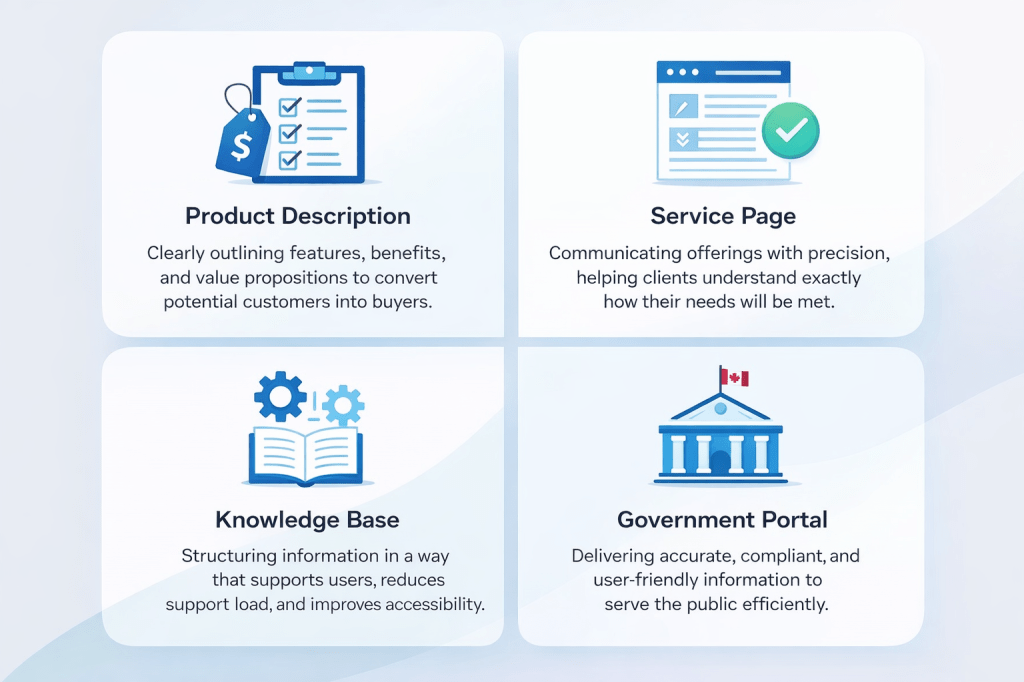
- A product description – clearly outlining features, benefits, and value propositions to convert potential customers into buyers.
- A service page – communicating offerings with precision, helping clients understand exactly how their needs will be met.
- A knowledge base – structuring information in a way that supports users, reduces support load, and improves accessibility.
- A government portal – delivering accurate, compliant, and user-friendly information to serve the public efficiently.
Content drives visibility, trust, and revenue.
For both Government of Canada initiatives and private sector organizations, working with structured content specialists ensures that information is not only written—but designed for usability, scalability, and long-term impact. Businesses like ours support this by translating complex ideas into clear communication systems, helping organizations meet compliance standards, improve user experience, and operate more efficiently across digital platforms.
Modern CMS platforms allow businesses to:
- Publish content quickly – through structured templates, workflows, and editorial systems that reduce turnaround time.
- Maintain consistency across channels – by applying standardized language, tone, and formatting across websites, documents, and internal systems.
- Scale digital presence across channels – by organizing content into reusable components that can be adapted across regions, audiences, and platforms.
- Integrate with analytics, CRM, and automation tools – enabling data-driven decision-making and seamless communication between systems.
From a practical standpoint, this is where our work becomes critical. We design and structure content in a way that fits directly into these systems—ensuring clarity, usability, and alignment with business objectives—while supporting both human users and digital processes.

This directly impacts economic activity by enabling businesses—especially small and medium enterprises—to compete in a digital-first marketplace.
***
Evolution of CMS Platforms
Traditional CMS platforms focused on website publishing.
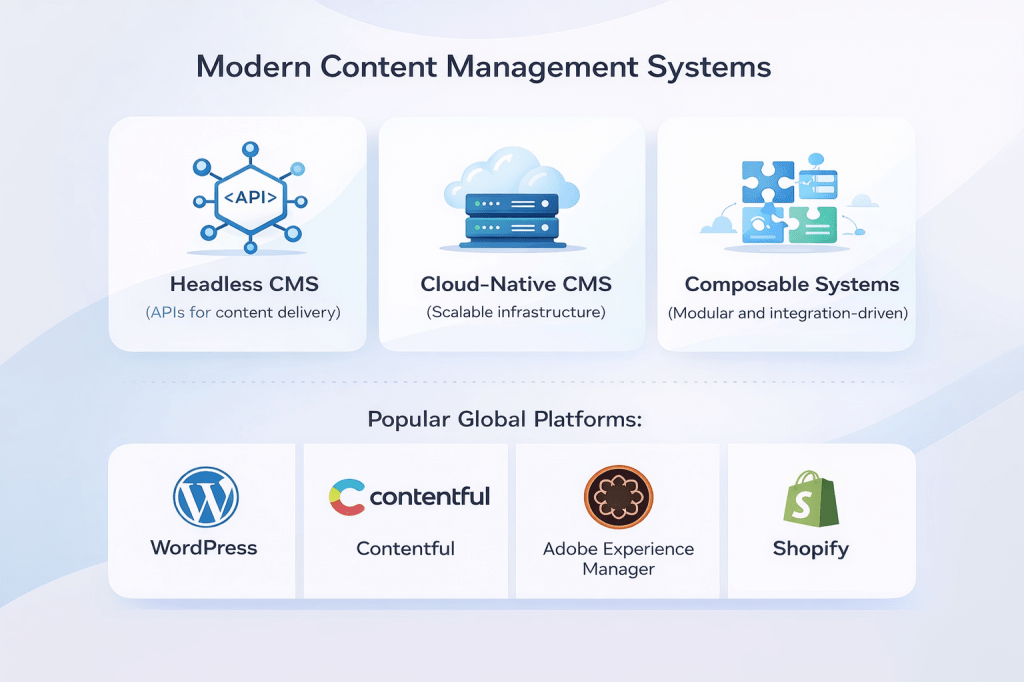
Today, systems have evolved into:
- Headless CMS (content delivered via APIs)
- Cloud-native CMS (hosted and scalable infrastructure)
- Composable systems (modular and integration-driven)
Popular global platforms include:
- WordPress – powering over 40% of websites globally
- Contentful – enterprise API-first content delivery
- Adobe Experience Manager – large-scale digital experience platform
- Shopify – widely used by Canadian businesses
These platforms allow businesses to move faster, reduce costs, and expand their digital reach.
***
The Role of Content Professionals
While CMS platforms provide the tools, content professionals bring them to life.

This includes:
- Technical writers
- Content strategists
- UX writers
- Editors
Their role is to:
- Structure information clearly
- Align messaging with business goals
- Ensure usability and accessibility
- Maintain content quality at scale
This is where businesses like yours become essential—bridging technology and communication.
Canadian opportunity and youth impact
Canada’s digital economy is expanding, with strong support from Innovation, Science and Economic Development Canada to promote innovation and digital adoption.
CMS platforms create opportunities for:
- Young writers entering tech
- Freelancers building digital careers
- Startups scaling quickly with minimal infrastructure
By lowering the barrier to entry, CMS systems empower youth to participate in the economy as:
- Creators
- Consultants
- Entrepreneurs
Final Thoughts
Modern CMS platforms are not just publishing tools—they are economic enablers.
They allow ideas to move faster, businesses to scale, and individuals to participate in a global digital ecosystem.
The future belongs to those who can not only build systems—but communicate through them effectively.


 Goat Cyber Space WordPress
Leave a comment