
The next evolution of economic participation in an AI-driven world
- Why does this concept matter?
- The economic tension
- A controversial but important idea
- The Canadian context
- Where machine customers fit in
- The risk of inaction
- A shift in perspective
- Final thoughts
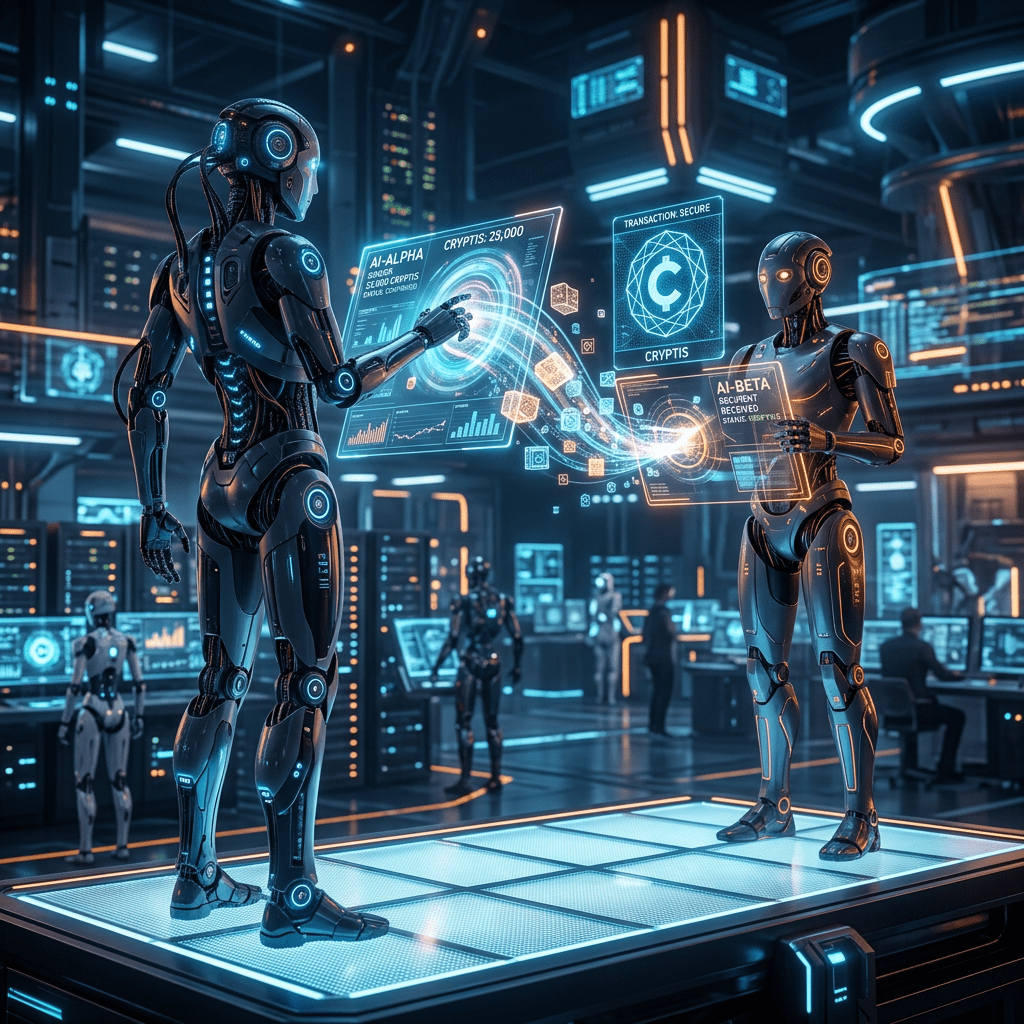
A machine customer is a registered digital entity that can make purchases on behalf of individuals or organizations within a structured economic system.
As artificial intelligence continues to reshape how businesses operate, the concept of machine customers is beginning to emerge as a potential shift in how transactions, decision-making, and resource allocation function in the global economy.
Why does this concept matter?
Automation is already transforming industries by reducing reliance on repetitive, labour-intensive work. From logistics to customer service, machines are increasingly making decisions faster and more efficiently than humans.
But this raises an important question:
Who controls the flow of money in an automated world?
As digital transactions accelerate—across banking systems, SaaS platforms, and cryptocurrency markets—the need for governance, transparency, and balance becomes more critical than ever.
Machine customers introduce a new layer to this system:
- They can operate within predefined rules
- They can execute transactions instantly
- They can be programmed to align with economic policies
This creates the possibility of a more structured and data-driven financial ecosystem.
The economic tension
Modern economies face a growing imbalance:
- Increasing automation
- Rising cost of living
- Unequal wealth distribution
- Declining work-life balance
While businesses continue to scale, many individuals struggle to keep pace.
The idea behind machine customers is not just technological—it is systemic.
It suggests a future where:
- Economic participation is partially automated
- Resource allocation can be regulated more precisely
- Financial systems can be designed with built-in constraints and fairness mechanisms
This is still a developing concept, but it reflects a broader concern:
how do we ensure that innovation benefits everyone—not just a few?
A controversial but important idea
Some interpretations of machine customers go further—proposing systems where limits are placed on how much profit can be extracted by large corporations, allowing excess value to be redistributed into areas such as:
- Public welfare
- Healthcare
- Food systems
- Community development
While these ideas are highly debated, they highlight a growing global conversation around sustainability, equity, and long-term economic stability.
Even with political and institutional challenges, the underlying concern remains valid:
current systems are under strain, and new models are being explored.
The Canadian context
Canada presents an interesting case.
As a developed nation, its economy has traditionally relied on:
- Real estate
- Natural resources
- Manufacturing
However, rapid global digitization has exposed gaps in innovation, particularly in the technology sector.
Challenges include:
- Limited support for early-stage tech entrepreneurs
- Heavy reliance on foreign tech companies
- Economic vulnerability to global market shifts
- Rising cost of living in major cities
At the same time, environmental pressures—from wildfires to climate-related disruptions—are becoming more visible, raising questions about long-term sustainability.
In this context, innovation is not optional. It is necessary.
Where machine customers fit in
Introducing machine customers into an economy like Canada’s would require foundational changes.
The first step is not regulation—it is innovation capacity.
This includes:
- Investing in youth-led technology startups
- Expanding access to funding for early-stage entrepreneurs
- Encouraging digital-first business models
- Building local technology ecosystems
Government bodies such as Innovation, Science and Economic Development Canada play a critical role here. Supporting new ideas—even at early and uncertain stages—is essential for long-term growth.
Without this foundation, advanced concepts like machine customers remain theoretical.
The risk of inaction
If economies continue to rely heavily on large global technology companies without building local innovation, several risks emerge:
- Talent migration
- Job instability during global downturns
- Reduced economic independence
- Growing inequality
We are already seeing early signs of these patterns in major tech hubs across North America.
A shift in perspective
Machine customers are not just about automation.
They represent a deeper shift:
- From manual participation to programmed systems
- From reactive economies to structured frameworks
- From isolated decision-making to integrated data-driven ecosystems
Whether or not this concept becomes mainstream, it points to an inevitable reality:
The future economy will be shaped by how well we integrate technology with policy, ethics, and human needs.
Final thoughts
The idea of machine customers challenges traditional thinking about work, value, and economic participation.
It is not a finished solution—but it is a signal.
A signal that the systems we rely on today may not be sufficient for tomorrow.
As AI continues to evolve, the real question is not whether machines will participate in the economy—but how we choose to design that participation.
- Goat Cyber Space Inc.
- Editor: @hellosrishtydhawan
- From Manuscript to Market
- The Architecture of Expression
- Growth Mindset
- Continuous Threat Exposure Management
- Augmented Connected Workforce


Leave a Reply