
The digital framework shaping environmental and human futures
- Environmental monitoring and sensing
- Predictive analytics for resource management
- Renewable energy management
- Waste management and recycling systems
- Circular economy platforms
- Environmental compliance and reporting
- Green supply chain management
- Environmental education and awareness
“A framework of digital solutions used to enable environmental, social and governance (ESG) outcomes that support long-term ecological balance and human rights.” — Gartner, 2024
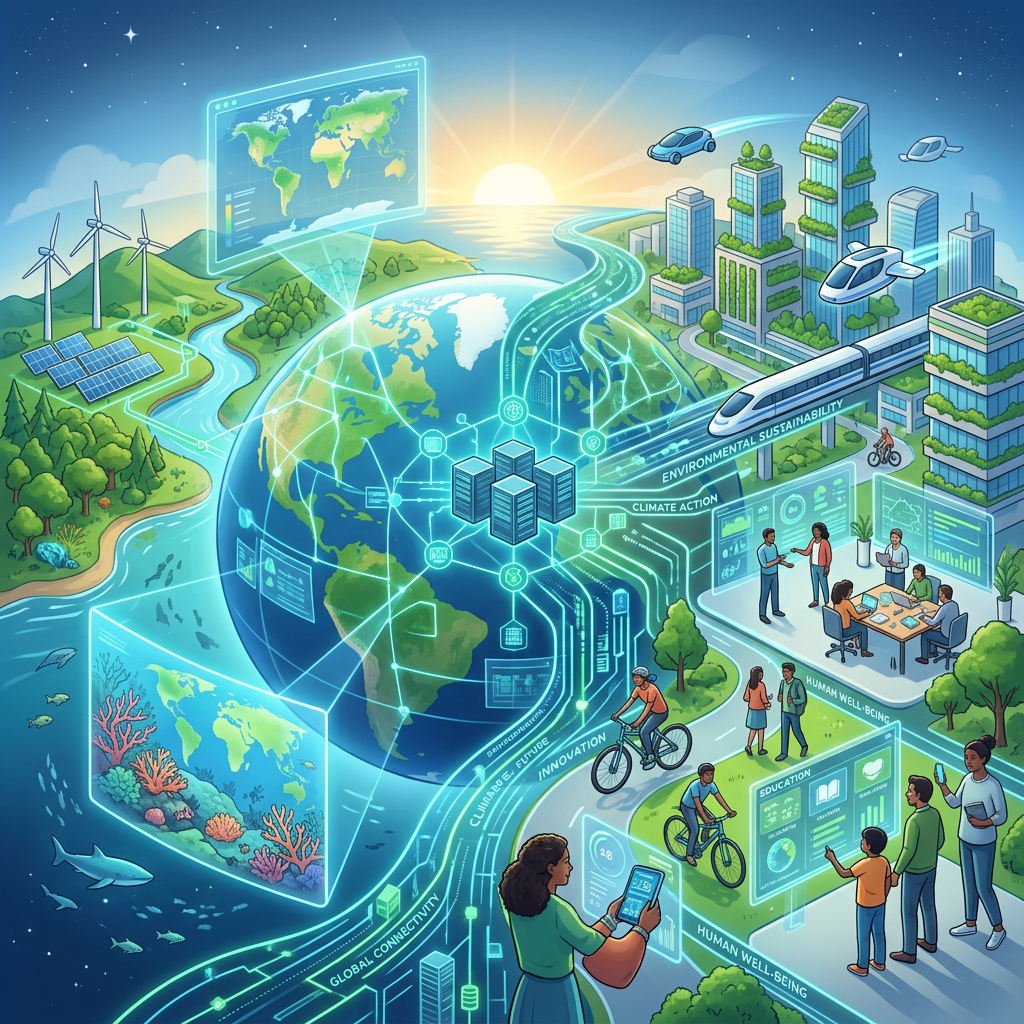
The Urgency
Sustainability is no longer a long-term ambition—it is an immediate necessity.
Canada’s Environment and Clean Technology (ECT) sector continues to face increasing pressure from climate-related disruptions. Wildfires, floods, droughts, heat waves, and landslides are no longer rare events—they are recurring realities shaping both economic and social stability.
In recent years:
- Thousands of wildfires have been reported across the country
- Entire communities have been displaced
- Environmental damage has resulted in millions in losses
These environmental challenges do not exist in isolation. They are deeply connected to broader societal issues, including:
- Indigenous rights and access to opportunity
- Gender equality and fair working conditions
- Housing affordability
- Public health and quality of life
Sustainable technology sits at the intersection of these challenges—offering tools not just to respond, but to transform.
What kind of businesses are classified under the Environment and Clean Technology (ECT) sector?
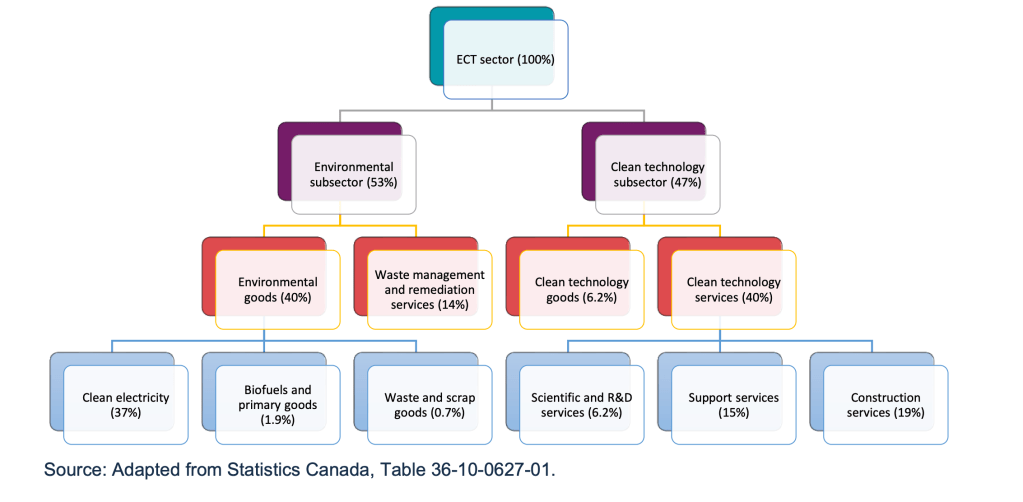
Canada’s Environmental and Clean
Technology Sector (2021), Government of Canada
Canada’s Environmental and Clean Technology sector includes a wide range of industries working toward sustainability and resource efficiency.
Key segments include:
- Clean electricity
- Biofuels and primary goods
- Waste and recycling systems
- Scientific research and development
- Environmental support services
Many of these sectors operate at massive scale, supported by both public and private institutions, and generate billions in annual revenue.
Major industry players such as Cenovus Energy Inc., Suncor Energy Inc., Canadian Natural Resources Limited, and TC Energy demonstrate the economic weight of this sector.
However, scale alone is not enough. The challenge now is transformation.
A few examples of these companies are listed below with their annual revenue last few year.
- Cenovus Energy Inc, annual revenue CAD $52.2 billion (2023 annual report).
- Suncor Energy Inc, annual revenue CAD $49.09 billion (2023 annual report).
- Imperial Oil Ltd, annual revenue CAD $
- Canadian Natural Resouces Ltd, annual revenue CAD $35.95 billion (2023 annual report).
- TC Energy Corp, annual revenue CAD $11.804 billion (2023 annual report).
The role of digital solutions
Sustainable technology uses digitization to apply digital tools in environmental systems for better efficiency.
Organizations across the ECT sector are increasingly adopting digital solutions to:
- Monitor environmental impact
- Optimize resource usage
- Improve operational efficiency
- Ensure regulatory compliance
Government bodies such as Innovation, Science and Economic Development Canada are actively supporting this transition through funding initiatives and innovation programs.
By 2027, it is expected that a significant portion of technology leadership will be directly accountable for sustainability outcomes—highlighting how deeply digital transformation is tied to environmental responsibility.
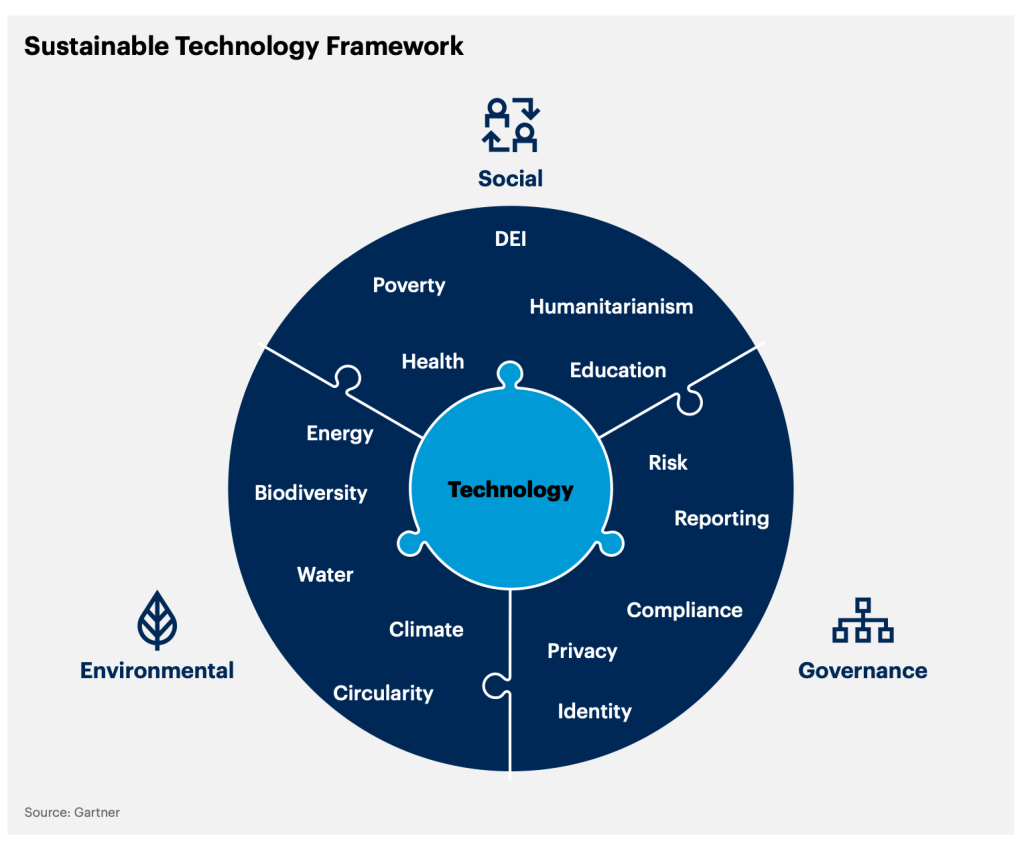
By 2027, 25% of CIOs will have compensation linked to their sustainable technology impact. (Source: Gartner)
Key digital solutions shaping sustainability
Environmental monitoring and sensing
Technologies such as IoT sensors and remote sensing systems allow real-time tracking of:
- Air quality
- Water conditions
- Soil health
- Biodiversity
This data enables faster response and more informed decision-making.
Predictive analytics for resource management
Using historical and real-time data, predictive models help organizations:
- Forecast demand
- Reduce waste
- Optimize resource allocation
This shifts operations from reactive to proactive.
Renewable energy management
Digital platforms help integrate and manage renewable energy sources such as:
- Solar
- Wind
- Hydroelectric systems
Smart grids and energy management tools improve efficiency and stability across power systems.
Waste management and recycling systems
Advanced tracking and analytics tools allow organizations to:
- Monitor waste streams
- Improve recycling processes
- Reduce material loss
Smart bins and sensor-based systems are already transforming urban waste management.
Circular economy platforms
These platforms enable the reuse and redistribution of materials within a closed-loop system, reducing reliance on new resource extraction and minimizing environmental impact.
Environmental compliance and reporting
Digital tools simplify compliance with environmental regulations by:
- Automating reporting
- Tracking emissions
- Ensuring adherence to standards
This reduces administrative burden while increasing transparency.
Green supply chain management
Organizations can now track and reduce their carbon footprint across supply chains using:
- Emissions tracking tools
- Sustainable sourcing platforms
- Supply chain visibility systems
Environmental education and awareness
Digital platforms, apps, and online communities are helping raise awareness and encourage sustainable behavior at both individual and organizational levels.
The bigger picture
Sustainable technology is not just about reducing harm—it is about redesigning how systems work.
It enables:
- Smarter use of resources
- Better alignment between business and environmental goals
- Long-term economic resilience
But adoption requires more than tools. It requires:
- Policy support
- Industry commitment
- Investment in innovation
- Public awareness
Final thoughts
The future of sustainability will be shaped by how effectively we integrate technology into environmental and social systems.
Digital transformation is no longer separate from sustainability—it is central to it.
Businesses, governments, and communities that embrace sustainable technology today are not just responding to change—they are shaping the conditions for a more balanced and resilient future.
- Goat Cyber Space Inc.
- @hellosrishtydhawan
From Manuscript to Market
How digital publishing systems are transforming modern authorship Writing has always been a deeply personal process. But publishing has changed. Today, authors are no longer dependent solely on traditional publishing houses to bring their work to life. With the rise of digital platforms, the journey from manuscript to reader has become more accessible, structured, and…

The Architecture of Expression
Modern Content Management Systems powering digital businesses Content is no longer static—it is dynamic, distributed, and deeply integrated into how businesses operate. By dynamic, we mean content is constantly shaped by evolving trends, cultural experiences, and shifting customer expectations. It reflects what people need in the moment—not what worked in the past. By distributed, content is no…
Growth Mindset
The discipline behind long-term success in a changing world In a world defined by constant change, technology alone is not enough. The real advantage lies in how quickly—and how willingly—you adapt. A growth mindset is the belief that abilities, intelligence, and success are not fixed traits, but can be developed through effort, learning, and persistence. It is…


Leave a Reply